Google Gemini Advanced Enhances Multimodal Input for Creative Teams
Accelerate creative processes and generate higher quality assets using Gemini Advanced's enhanced multimodal input.
What matters today
Accelerate creative processes and generate higher quality assets using Gemini Advanced's enhanced multimodal input.
Key points
- Google Gemini Advanced executive action plan
- Step 1: Open Gemini Advanced and Select Multimodal Input
- Step 2: Upload Relevant Images, Audio Clips, and Text Descriptions
- Step 3: Prompt Gemini to Generate Creative Content
- Step 4: Review the Generated Content and Provide Feedback for Refinement
What you will learn in this article:
- How to combine text, image, and audio inputs to generate richer creative content.
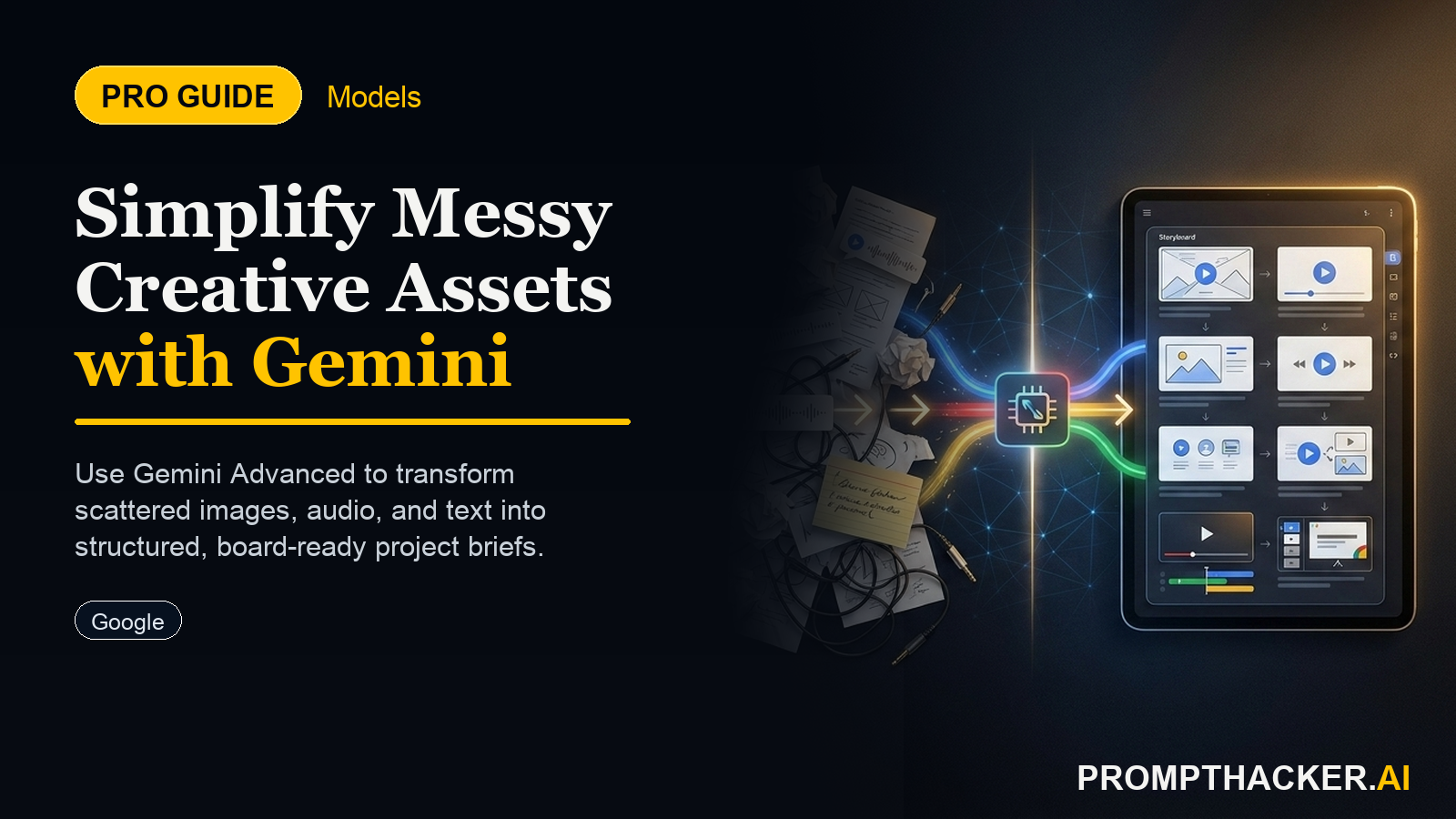
- How to streamline the creation of marketing copy, social media assets, and storyboard concepts.
- How to reduce iterative content creation cycles for faster campaign development.
- How to leverage multimodal AI to maintain brand voice and visual consistency across campaigns.
A Marketing Director at a rapidly growing consumer electronics startup faces a persistent challenge: launching new products with limited time and an overflowing creative pipeline. Each new device demands fresh marketing copy, compelling social media visuals, and engaging ad concepts, often requiring multiple rounds of internal review and external agency collaboration. The pressure to innovate quickly, stay relevant, and capture market share means every minute spent on manual content creation or iterative design cycles directly impacts launch timelines and competitive advantage.
Failing to accelerate this creative process can lead to missed market windows, diluted brand messaging, or campaigns that simply do not resonate. The cost is not just in delayed product launches, but in lost revenue and a diminished brand presence in a crowded market. Creative teams become bottlenecks, struggling to keep pace with strategic demands, while the quality and originality of their output may suffer under duress.
This article details how Google Gemini Advanced's enhanced multimodal input capabilities are designed to directly address these challenges. By combining diverse inputs,text, images, and audio,executives can empower their creative teams to generate high-quality marketing and design assets at unprecedented speed. This allows for rapid prototyping of campaign ideas, ensures brand consistency, and frees up valuable creative talent for strategic thinking rather than repetitive tasks.
Google Gemini Advanced executive action plan
Google Gemini Advanced has significantly upgraded its multimodal input capabilities, offering creative teams a powerful new approach to content generation. This update allows users to provide Gemini with a combination of text, images, and audio simultaneously, enabling the AI to synthesize these diverse data points into more coherent, relevant, and high-quality creative outputs. The result is a dramatic acceleration of creative workflows, from initial concept development to final asset generation for marketing campaigns, product launches, and internal communications.
The core benefit for executives lies in the ability to reduce the time from ideation to actionable creative assets. Instead of relying on sequential processes,first writing copy, then briefing designers, then sourcing imagery,multimodal input allows for a holistic creative brief to be processed by AI in one go. This eliminates iterative content creation and manual asset sourcing, saving marketing and design teams an estimated 90 minutes per week. For a marketing director overseeing multiple campaigns, this translates into dozens of hours reclaimed each month, allowing for more strategic oversight and less time spent on tactical execution.
Consider a scenario where a Creative Lead at a national apparel brand needs to develop a new social media campaign for their upcoming summer collection. Traditionally, this would involve a detailed text brief for copywriters, mood boards for designers, and potentially audio cues for video concepts. With Gemini Advanced, this entire creative vision can be presented to the AI simultaneously.
Step 1: Open Gemini Advanced and Select Multimodal Input
The first action is to initiate a new session within Gemini Advanced. Users will find a clear option to upload various file types, including images (JPEG, PNG), audio clips (MP3, WAV), and, of course, text. This user interface is designed for intuitive drag-and-drop functionality or simple file browsing.
Why it matters:
This initial step sets the stage for a unified creative brief. By enabling multiple input channels from the outset, Gemini is primed to understand the comprehensive context of the creative task, rather than processing fragmented instructions. This holistic approach prevents misinterpretations that often arise when different aspects of a brief are communicated separately.
Step 2: Upload Relevant Images, Audio Clips, and Text Descriptions
This is where the power of multimodal input becomes evident. Instead of describing a visual aesthetic in text and hoping the AI interprets it correctly, you can provide actual visual examples. If your brand has a specific sonic identity, an audio clip can convey that directly.
- Images: Upload photos of your product, mood board images, competitor ads you admire, or even simple sketches of desired layouts. For the apparel brand example, this might include high-resolution product shots of the summer collection, lifestyle photography showing models wearing the clothes in a beach setting, and examples of past successful ad visuals that align with the brand's aesthetic.
- Audio: Include a short clip of your brand's jingle, a voiceover style you prefer, or even ambient sounds that evoke the desired mood (e.g., ocean waves for a summer campaign). This is particularly useful for video ad concepts or audio-driven social media stories.
- Text Descriptions: Complement your visual and audio inputs with specific text prompts. This is crucial for defining the objective, target audience, key message, desired tone of voice, call to action, and any specific constraints (e.g., "focus on sustainability," "emphasize comfort").
Worked Example Prompt
"Generate three social media ad concepts for our new summer apparel collection. Images to incorporate: [Upload 3-5 high-resolution product photos and 2-3 lifestyle photos of models on a beach]. Audio cue: [Upload 10-second clip of upbeat, acoustic summer music]. Brand voice: Energetic, aspirational, sustainable, and inclusive. Target audience: Young adults, 18-30, active lifestyle, environmentally conscious. Key message: 'Embrace the summer with sustainable style and ultimate comfort.' Call to action: 'Shop the new collection now - link in bio!' Output requirements: For each concept, provide: 1. A catchy headline (under 10 words). 2. Body copy (2-3 sentences). 3. Suggested visual elements (describe how uploaded images should be used). 4. Suggested audio usage (how the uploaded audio should integrate). 5. Relevant hashtags (5-7). Focus on Instagram and TikTok formats."
Why it matters:
This combined input eliminates ambiguity. The AI does not need to guess the visual style or auditory feel; it directly receives these inputs. This precision drastically improves the relevance and quality of the generated outputs, reducing the need for extensive revisions. It ensures that the AI's output is grounded in the actual assets and desired aesthetic, not just a textual description.
Edge Cases and Troubleshooting:
Low-Quality Inputs: If uploaded images are pixelated or audio is distorted, Gemini's output quality will suffer. Ensure all media inputs are high-resolution and clear.
Conflicting Inputs: If your text prompt describes a "minimalist" aesthetic but your uploaded images are "maximalist," the AI may produce inconsistent results. Review your inputs for coherence before submission.
Overly Vague Instructions: While multimodal, Gemini still benefits from specific text instructions. "Make it cool" is less effective than "Use a vibrant color palette with a focus on blues and greens, evoking a sense of calm and freshness."
Step 3: Prompt Gemini to Generate Creative Content
With all inputs uploaded, the executive or creative team member then issues the specific prompt. The prompt should be clear, concise, and direct about the desired output. The example prompt above illustrates this specificity.
Why it matters:
The prompt acts as the orchestrator, telling Gemini how to synthesize the diverse inputs. A well-crafted prompt guides the AI to focus on specific aspects of the multimodal brief, ensuring the output aligns with the strategic objective. This step translates raw inputs into structured, actionable creative concepts.
Step 4: Review the Generated Content and Provide Feedback for Refinement
Gemini will quickly generate multiple creative concepts based on the multimodal input. These outputs will be presented as text, often with descriptions of the visual and audio elements. The executive's role here is critical for qualitative assessment.
- Initial Review: Evaluate each concept for alignment with brand guidelines, campaign objectives, and overall creative vision.
- Refinement: If a concept is close but not perfect, provide specific feedback to Gemini. For example: "Concept 1 is good, but make the body copy more concise and suggest an alternative image from the uploaded set that focuses more on the product's texture." Or: "For Concept 3, lighten the tone slightly and add a sense of urgency to the call to action."
Why it matters:
AI is a powerful assistant, but human judgment remains indispensable for creative endeavors. This iterative feedback loop is where the AI learns your specific preferences and refines its output to meet exact requirements. It transforms the AI from a simple generator into a collaborative partner, ensuring the final assets are not just generated, but *perfected*. This step drastically reduces the back-and-forth typically associated with agency reviews or internal design revisions.
Step 5: Integrate the Best Outputs into Your Creative Workflows
Once satisfied with the generated concepts, the final step involves integrating them into existing creative workflows. This might mean sharing the AI-generated copy and visual descriptions directly with designers, using them as a foundation for A/B testing, or presenting them to stakeholders for approval.
- Accelerated Campaign Development: The apparel brand's Creative Lead can now present three distinct, fully-fleshed-out social media ad concepts to the Marketing Director within minutes, rather than days. This allows for faster decision-making and quicker deployment of campaigns.
- Resource Optimization: Instead of designers spending hours on initial concepting, they can focus on refining the AI-generated ideas, producing high-fidelity mock-ups, and ensuring brand consistency. Copywriters can use the AI's output as a strong first draft, focusing their efforts on nuanced messaging and persuasive language.
- Strategic Focus: By offloading the initial, repetitive creative tasks to Gemini, executives and their teams can allocate more time to strategic planning, market analysis, and innovative thinking.
Why it matters:
This seamless integration ensures that the time savings and quality improvements gained from multimodal input are realized throughout the entire creative pipeline. It empowers teams to move faster, produce more, and maintain a competitive edge by leveraging AI as a force multiplier for creative output.
Potential Pitfalls and Solutions:
Over-reliance: While powerful, Gemini Advanced should augment human creativity, not replace it. Executives must ensure teams use AI for ideation and first drafts, reserving human expertise for nuanced refinement and strategic oversight.
Three deep dives. Four useful moves. One email worth opening.
PromptHacker turns the AI firehose into practical next steps for work, health, family, and everything time keeps trying to steal.