91 Countries, $200 Billion: The AI Governance Summit That Dropped "Risk" for "Impact"
What the New Delhi Declaration commits to - in terms actionable for enterprise planning
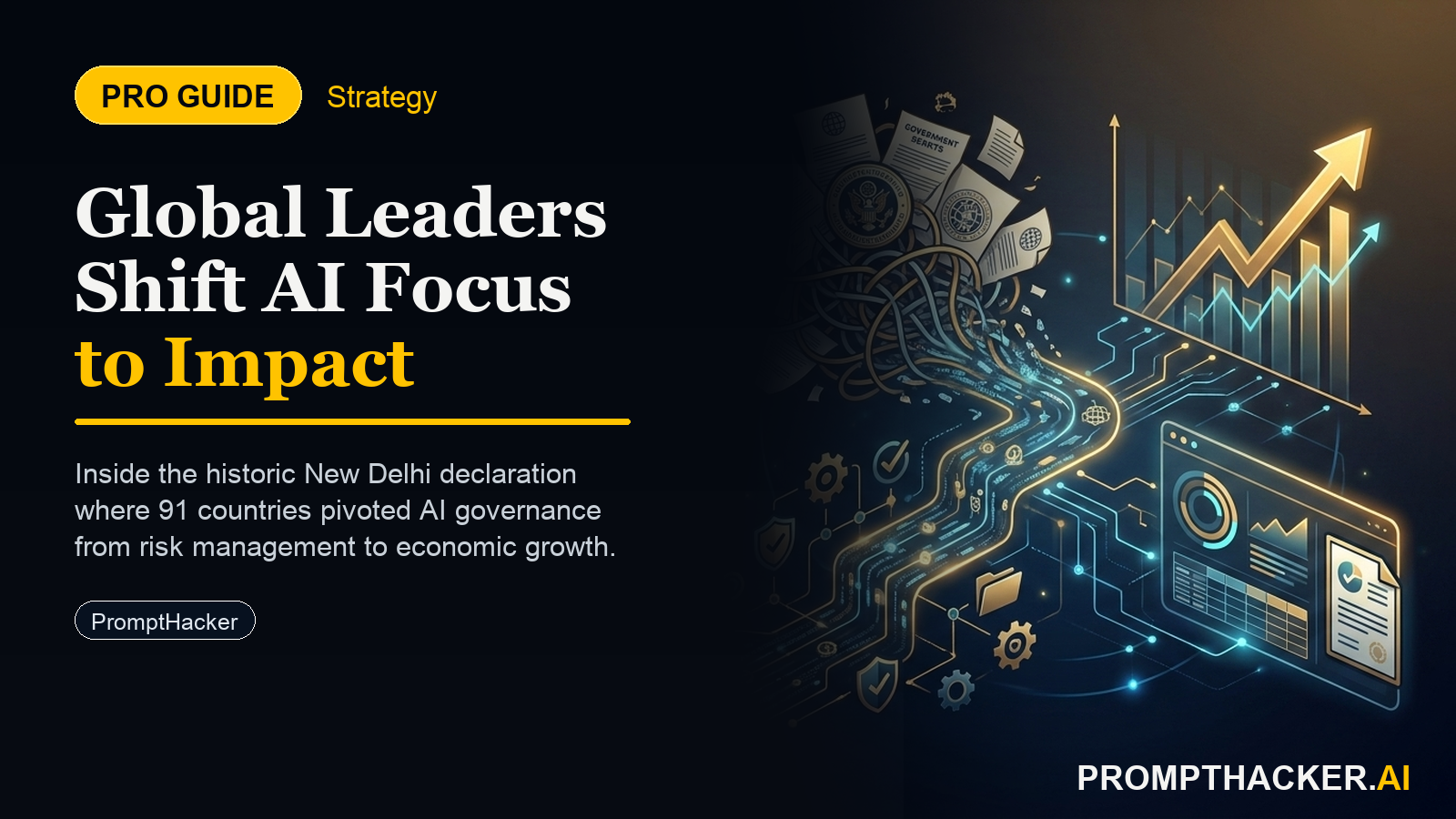
What matters today
What the New Delhi Declaration commits to - in terms actionable for enterprise planning
Article roadmap
What you will learn
-
What the New Delhi Declaration commits to - in terms actionable for enterprise planning
-
Why the framing shift from "AI safety" to "AI impact" generates different regulatory downstream effects
-
How the India summit diverges from the Paris AI Action Summit - and why the divergence matters for your compliance planning
-
The $200 billion in investment commitments: where the money is directed and what it signals for emerging-market AI deployment
-
Four enterprise implications of dual-track AI governance for organizations operating across jurisdictions
The India AI Impact Summit ran from February 16-21, 2026 in New Delhi, convened by the Indian government and co-hosted with Carnegie India. It closed with the New Delhi Declaration, signed by delegations from 91 countries.
Two weeks before, the Paris AI Action Summit produced the International AI Safety Treaty, signed by 41 nations and focused on risk mitigation, harm documentation, and international liability frameworks. The India summit was a deliberate counter-position - 91 signatories, a declaration titled "Impact," $200 billion in investment commitments. The framing difference will generate different regulatory frameworks, and enterprises operating across jurisdictions will encounter both.
This is a PromptHacker Premium article.
The full Paris/New Delhi governance comparison, six working groups, and four enterprise action steps are available to Premium subscribers.
The Framing Difference
Paris frame (risk-centered): requires harm documentation before deployment, liability mechanisms, regulatory compliance built around what AI should not do. New Delhi frame (impact-centered): requires outcome measurement after deployment, technology-transfer obligations, regulatory compliance built around what AI should deliver.
Neither has universal force yet. But both are likely to influence domestic regulation in their respective signatory blocs - and enterprises operating across those blocs will face compliance requirements from both simultaneously. Paris generates AI impact assessments and audit obligations. New Delhi generates impact reporting and access provisions.
The $200 Billion Investment Framework
The investment commitments are directed at AI compute infrastructure for lower-income nations, training data access and local language model development, technical assistance for government AI deployment, and AI for agriculture, healthcare, financial inclusion, and climate adaptation. These are procurement signals. Organizations supplying cloud infrastructure, applied AI, health informatics, or agricultural technology have a five-year pipeline of government-backed demand in 91 markets.
Action Steps
- Map your jurisdiction exposure. Identify which countries your AI deployments touch. Sort them by Paris-aligned versus New Delhi-aligned governance frameworks. Build this map now, before regulations are finalized, while you still have design flexibility.
- Add impact reporting to your AI documentation stack. You likely have harm-documentation workflows for EU AI Act compliance. Stand up a parallel impact-measurement workflow starting with your highest-value AI deployments.
- Flag the six working groups for your policy and government affairs teams. The groups are consulting enterprise stakeholders through government delegations. Engagement now shapes implementation frameworks for 91 markets.
- Model the $200 billion procurement opportunity if your products apply to agriculture, healthcare, financial inclusion, climate, or infrastructure AI in developing markets.
- Standardize AI governance at the higher tier. Build one compliance program meeting both Paris and New Delhi requirements rather than maintaining parallel programs. The near-term cost is higher; the long-term cost of operating below standard in any market is higher still.
Three deep dives. Four useful moves. One email worth opening.
PromptHacker turns the AI firehose into practical next steps for work, health, family, and everything time keeps trying to steal.