The Prompt Improvement Game: Teach a Kid the One AI Skill That Matters Most
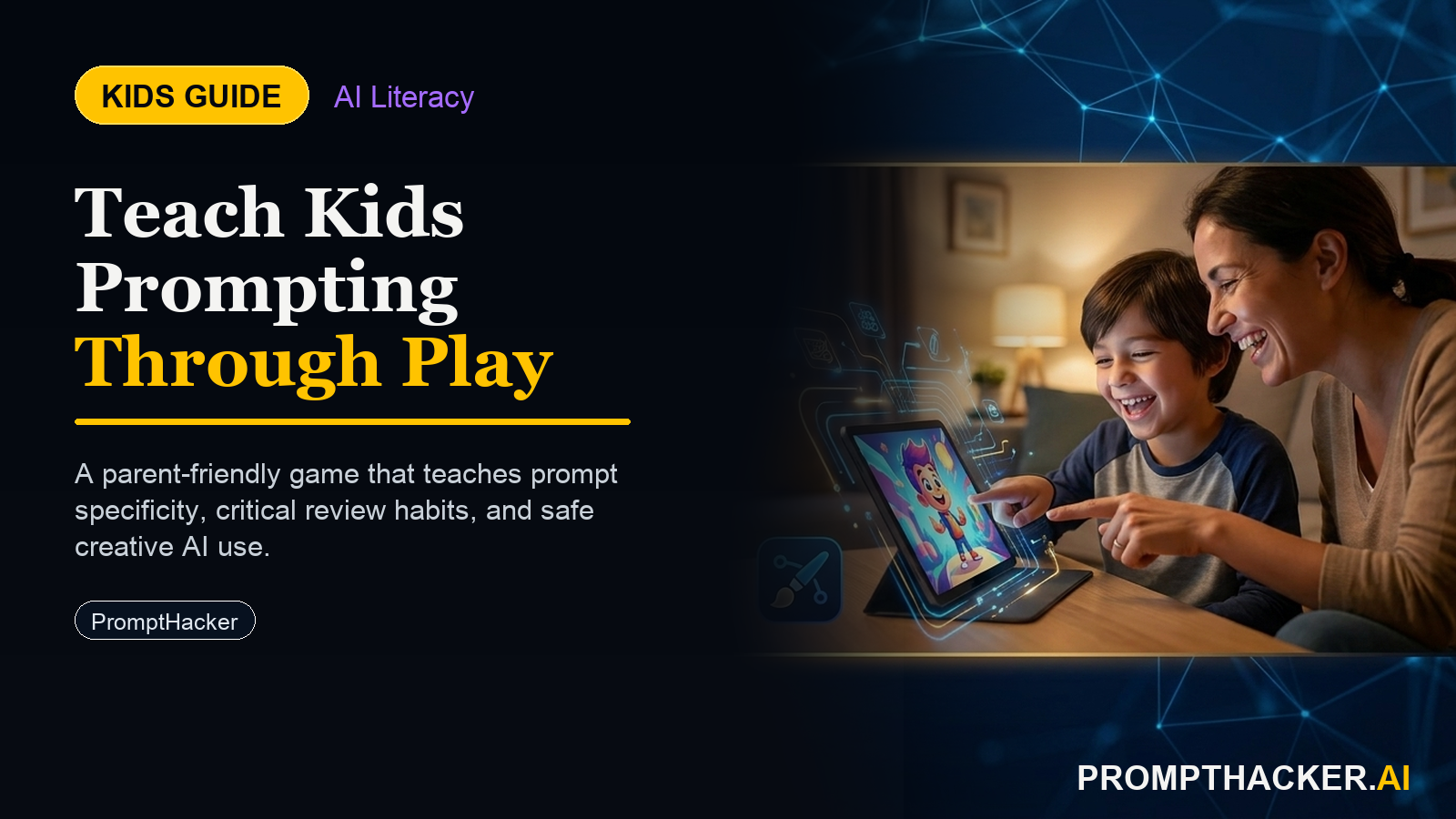
Kids create a hands-on AI project: The Prompt Improvement Game: Teach a Kid the One AI Skill That Matters Most. A parent or educator helps them build, test, and explain what the AI tool gets right and wrong.
What matters today
Kids create a hands-on AI project: The Prompt Improvement Game: Teach a Kid the One AI Skill That Matters Most. A parent or educator helps them build, test, and explain what the AI tool gets right and wrong.
Article roadmap
What you will learn
-
The simple game that teaches the core skill of working with AI
-
Three difficulty versions for ages 8, 11, and 14
-
The exact setup and the AI extension prompt to paste
-
What the child builds and why it sticks better than a lecture
-
The safety notes that actually apply to this tool
The single most useful AI skill is not memorizing tricks or knowing which model is best. It is understanding that the quality of the answer depends on the quality of the question. Adults learn this slowly, by frustration. A child can learn it in five minutes, by playing.
The Prompt Improvement Game is exactly that lesson, turned into a game. The child gives an AI a deliberately terrible prompt, reads the vague result, then improves the prompt and runs it again, watching the answer get better each time. By the end they have four answers side by side and a clear sense of which change made the biggest difference. They are not being told that better prompts matter; they are watching it happen in their own words.
It works because it is concrete and it is theirs. The improvement is visible, immediate, and produced by their own edits, which makes the lesson stick far better than any explanation. And it sets up the right relationship with AI from the start: a tool you direct with clear thinking, not a magic box that reads your mind.
What the Child Builds
By the end of the game, the child has produced a side-by-side comparison of four AI answers, each from a progressively better version of the same request, plus one sentence explaining which change improved the answer the most. That comparison is the artifact. It is small, but it is concrete evidence of a real principle, and the child made it themselves.
The activity is built around active editing, not passive watching. The child writes each prompt, reads each result, and decides how to improve the next version. That is the difference between learning a skill and watching a demo.
Three Versions by Age
Pick the version that fits the child. Each one teaches the same core idea at a different depth.
Age 8 version. Give the AI a super vague prompt like "write something cool." Read the result together. Then help the child make the prompt better, for example "write a short funny story about a cat who is afraid of water." Run it again and compare the two answers. Ask which one they liked more and why.
Age 11 version. Start with a terrible prompt, then improve it three times, for four versions total. After each improvement, compare it to the one before. At the end, ask: which change made the biggest difference, and why?
Age 14 version. Run a full prompt-engineering experiment with four deliberate stages: vague, then specific, then structured (asking for a particular format like a numbered list), then role-assigned (telling the AI to answer as a specific kind of expert). Have the child document what changed at each stage and write a short conclusion on why the last prompt produced the best answer.
Setup and the AI Extension Prompt
Age range: 8 to 16, with the three versions above. ChatGPT free tier works; a parent should set up the login.
Setup: Open ChatGPT in a browser on any household device, a phone, tablet, or laptop. Sign in with a parent-managed account. No paid subscription is required.
Safety: Use a parent-managed ChatGPT account, not a child's independent login, since ChatGPT's terms set a minimum age and the activity should happen with an adult present. Conversations are saved to the account history, so a parent can review exactly what was asked and answered afterward. Keep the session to the game and stay nearby; the value is in the discussion, not unsupervised exploration.
To run the experiment cleanly, have the child paste this opener so the AI explains each improvement as they go:
AI EXTENSION PROMPT
I am going to give you four versions of a request, from worst to best. After each one, tell me in one sentence why this version is clearer than the last. Here is version 1: write something cool.
Then the child pastes versions two, three, and four one at a time, reading the AI's one-sentence explanation after each. By the end, the AI has narrated exactly why each edit helped, reinforcing what the child is already seeing in the answers.
Action Steps Summary
- Pick the right version: Choose the age 8, 11, or 14 version based on the child.
- Set up a parent-managed account: Open ChatGPT in a browser and sign in with an adult account. Free tier is fine.
- Start with a deliberately bad prompt: Have the child type something vague like "write something cool" and read the result together.
- Improve and compare: Paste the AI extension prompt, then run progressively better versions one at a time, comparing each answer.
- Name the lesson: Ask the child which change helped most and why, using the conversation starters to make the principle explicit.
For Parents and Educators
Conversation starters:
- "Which of the four answers was your favorite, and what did you change in the question to get it?"
- "If a friend asked you for help but only said 'help me,' what would you need to ask them before you could actually help? How is that like talking to AI?"
- "Was there a version where the answer got worse instead of better? What does that tell us about giving instructions?"
Core AI concept:
The child is learning that AI output quality is controlled by input quality, the foundational skill of prompting. More deeply, they are learning that AI does not know what you mean unless you say it; it responds to what you actually wrote. That distinction, between intent and instruction, is the same skill that separates effective AI users from frustrated ones, and it transfers to clear communication with people too.
Three deep dives. Four useful moves. One email worth opening.
PromptHacker turns the AI firehose into practical next steps for work, health, family, and everything time keeps trying to steal.